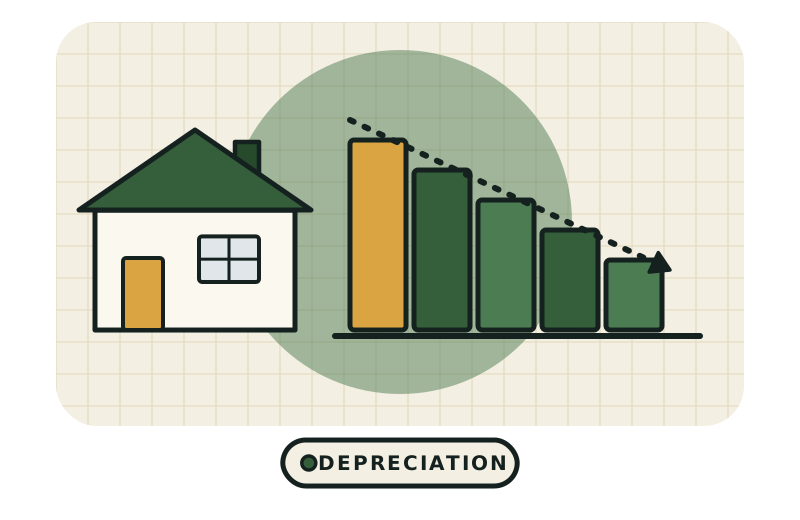
Every year you own a rental building, the tax code lets you deduct a slice of its cost as depreciation, even though the property may be rising in value. That is a real benefit. It is also a loan from the future. When you sell, the IRS wants the deductions back, in a specific way, at a specific rate.
How the math works
Your adjusted basis is what you paid, plus improvements, minus the depreciation you took or were allowed to take. When you sell, your gain is the sale price (after selling costs) minus that lowered basis. The part of the gain that is just the depreciation being reversed is called unrecaptured Section 1250 gain, and for most investors it is taxed at up to 25%. Any gain above that is long-term capital gain at the ordinary long-term rates, and high earners can add the 3.8% net investment income tax.
“Allowed or allowable” is the trap
The tax code reduces your basis by the depreciation you were allowed to take, whether or not you claimed it. Skipping depreciation does not avoid recapture; it just gives up the deduction and still pays the tax. If a prior preparer never took it, there is a correction process, but it is a process, and it is easier before the sale than after.
What changes the number
- The land and building split on your closing statement, since land is not depreciable
- Improvements that were capitalized, each with its own depreciation clock
- A cost segregation study, which pulls deductions forward and can raise the recapture bill at sale
- Passive losses you have been carrying forward, which are released when you sell the whole property
- Whether you do a like-kind exchange, which defers the gain and the recapture along with it
- The state: most states tax the gain too, and a property in another state means a return there
What to do before you list
Get a number. A rough projection of the gain, the recapture, and the passive losses released takes less than an hour and tells you whether to sell this year or next, whether an exchange is worth its cost, and how much to set aside. Doing the projection after the closing is how people end up with a bill and no cash to pay it. The rules for investors are laid out on the real estate page.